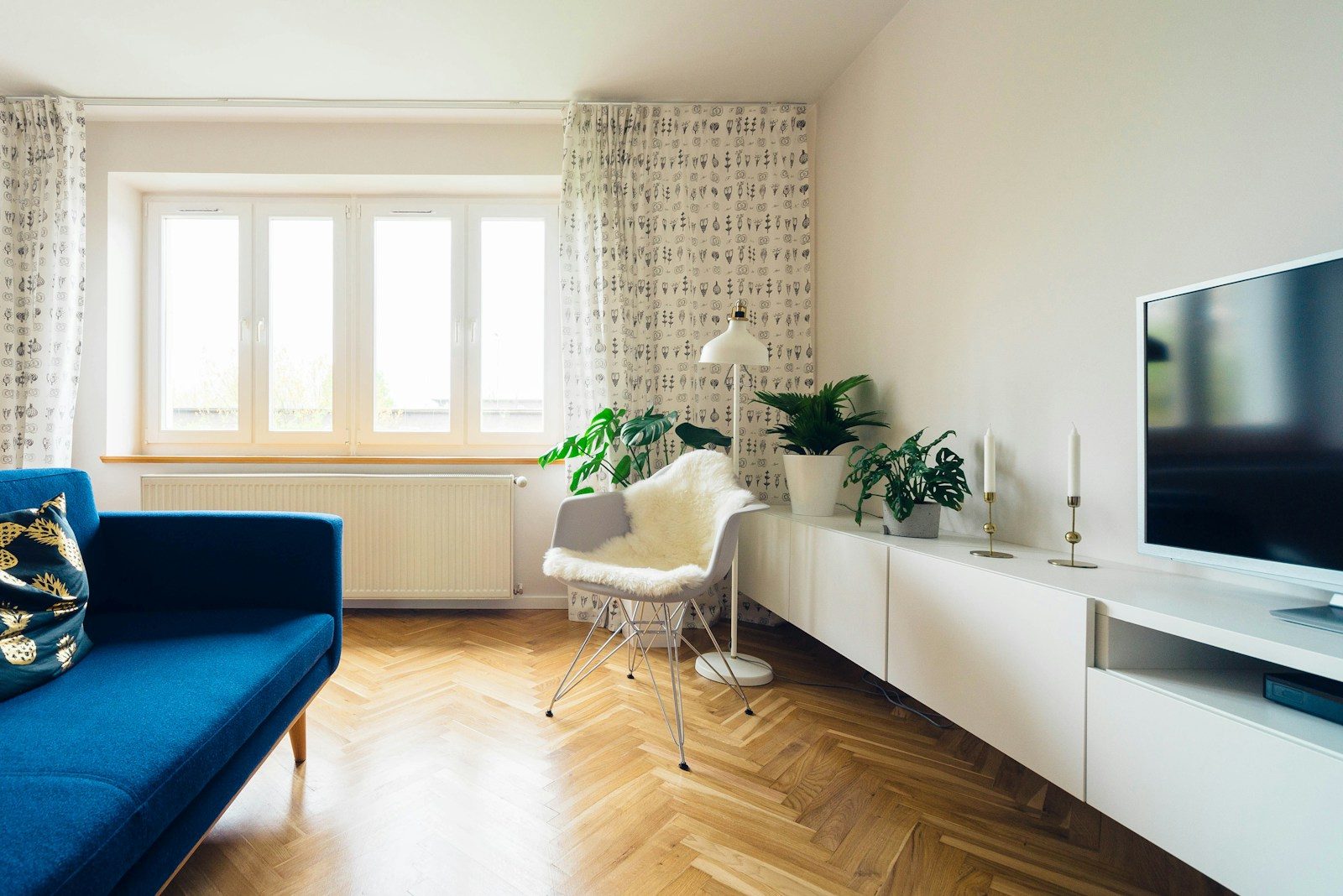
Few things can derail an otherwise carefully considered interior quite like an awkward radiator.
There is often a temptation to treat heating as something that should simply be hidden. Radiators end up behind sofas, beneath unsuitable shelves or squeezed into leftover sections of wall. Yet modern interior design increasingly treats fixed services as part of the planning process rather than something to disguise at the end.
The first consideration is placement. Furniture should not automatically be pushed against the wall simply because that is the conventional arrangement. Pulling a sofa slightly forward can create breathing space around a radiator while also producing a more relaxed furniture layout.
Radiators beneath windows present another common challenge. In a smaller room, the obvious position for a bed, desk or cabinet may overlap with the heating. This is where custom joinery can be useful, although it needs to be designed carefully so that airflow is not unnecessarily restricted.
A radiator cover can also become part of the architecture of a room rather than an afterthought. Slatted timber fronts, perforated metal and decorative grilles can turn an otherwise utilitarian object into a deliberate design feature. The proportions matter, however. A cover that is too bulky can make a small room feel even more cramped.
There is also an opportunity to reconsider the radiator itself. Vertical models can make use of narrow stretches of wall that would otherwise be difficult to furnish, while contemporary radiators are available in a much wider variety of shapes and finishes than the familiar white horizontal panel.
In period properties, the choice can be more architectural. Traditional-style radiators can reinforce the character of a Victorian, Edwardian or Georgian interior, while a deliberately contemporary model can create an interesting contrast.
The important thing is to decide where the heating belongs before finalising the furniture plan.
This sounds obvious, but it is surprisingly easy to design the perfect room on paper and discover afterwards that the only sensible position for a large sofa happens to be directly in front of the radiator.
Good interior design is often about solving these unglamorous practical problems before they become visible ones. A radiator may not be the most exciting element in a room, but dealing with it properly can make the difference between an interior that merely looks good in photographs and one that genuinely works for everyday life.